Newer Entries  Older Entries


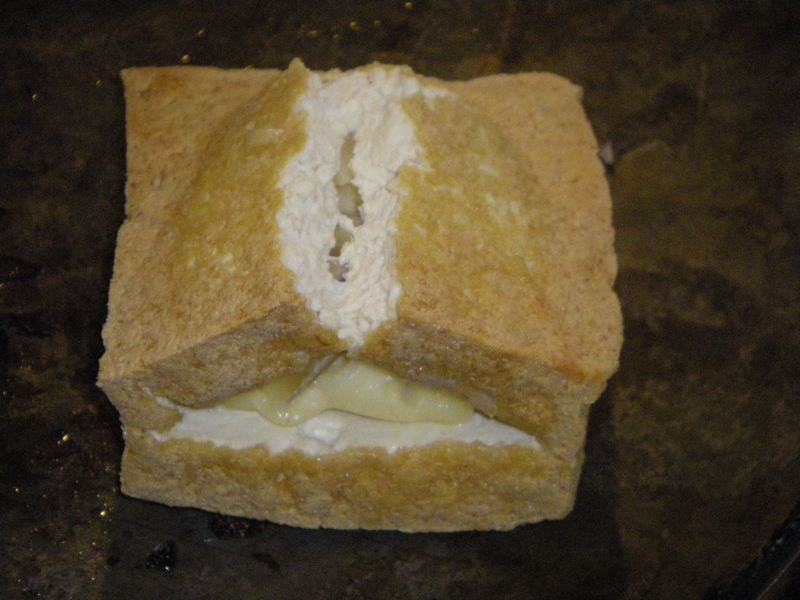
You can see the melted raclette in the middle. You can't see the scallions which means we should have added more.

02/03/09 - Deep Fried Tofu and Raclette We recently tried a rather improbable recipe for Fried Tofu Stuffed With Raclette Cheese. It was in Izakaya: The Japanese Pub Cookbook which we had bought, because we had enjoyed our meal at a Japanese pub in Honolulu, Izakaya Nonbei, some years back. The izakaya style of cooking tends to be informal and imaginative, but we had never seen any dishes made with cheese. Let's face it, Asia, unlike Europe, is not big on cheese. The recipe itself was easy. Just deep fry the tofu. Stuff it with scallions and raclette, then broil it until the cheese melts. The prunes were simple as well. Just dump them in a pot with red wine, a stick of cinnamon and simmer. The combination was incredible. Let's hear it for fried food and melted cheese, the glory of two continents combined in one great dish. The trick was to get a good, super-firm tofu. We went with the special 1950s stuff that was developed to take anything but a direct hit. We found that locally, but we had to get into Seattle for the raclette. It was worth it. To be honest, we've never had anything quite like this in any izakaya, but we'll be keeping our eyes, and mouths, open.

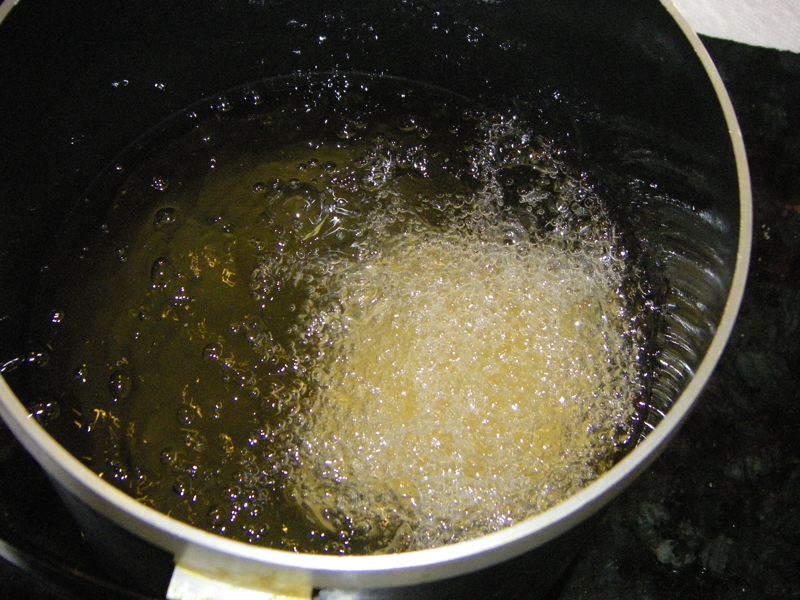
We deep fried the super-firm tofu in peanut oil. That's our Fry Baby in action. Then we cut a slit in the tofu, stuffed in the cheese and scallions and broiled them until the cheese melted.

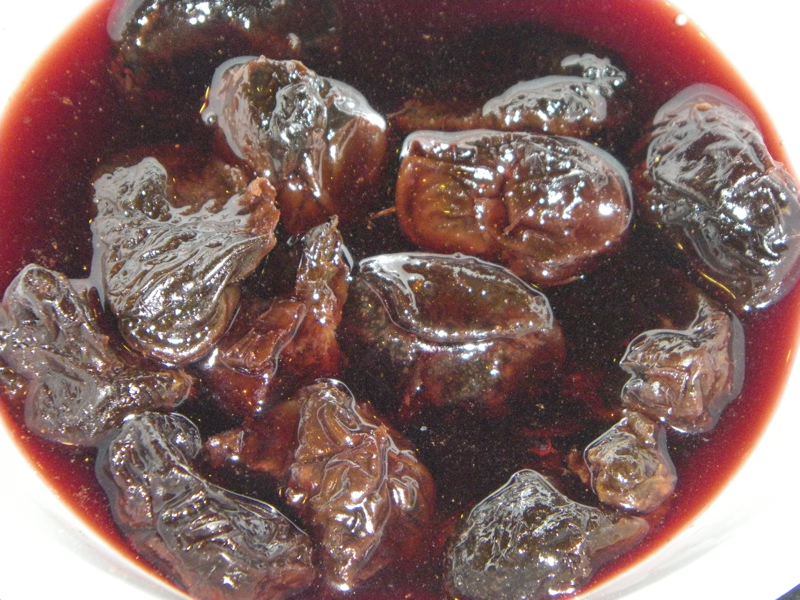
Here are the simmered spiced prunes in red wine with cinnamon.

Keywords: food, recipes


01/23/09 - Haiga Rice, Uni and Monkfish Liver

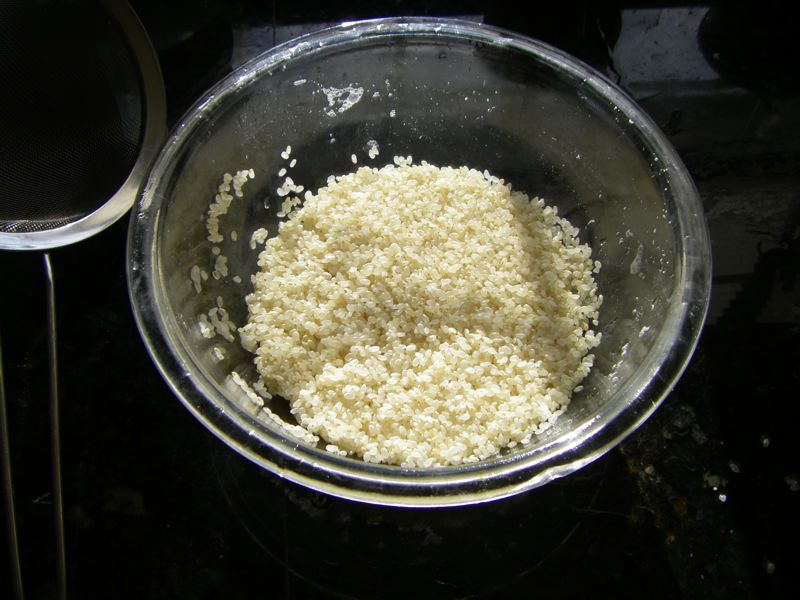
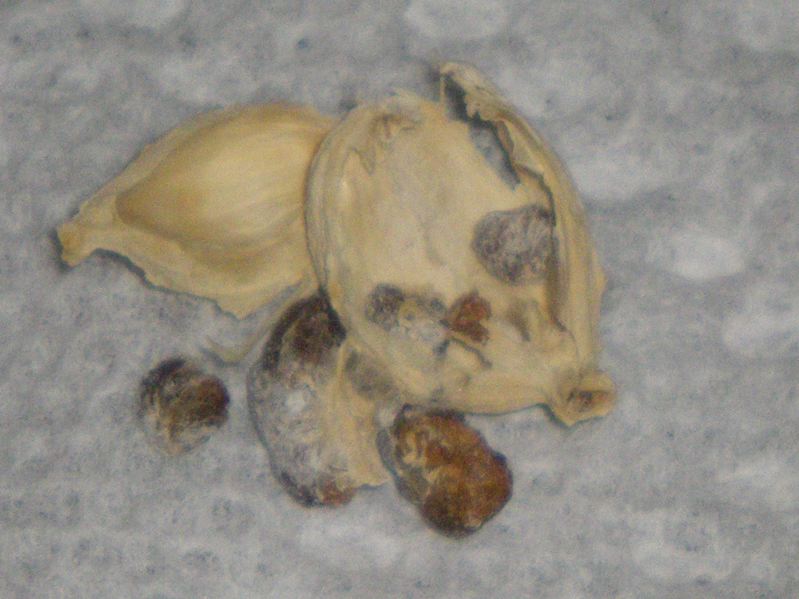
It started with a sale on sea urchin roe at Catalina Offshore Products, and in the typical Kaleberg fashion it went on from there. To start with, we bought four trays of the sea urchin roe and an order of frozen steamed monkfish liver which is also known as ankimo, but this is getting ahead of things. It all really started with some haiga rice we had bought some time ago. That's the haiga rice being soaked in the picture to the right.

Haiga rice is a partially milled short grain rice, so it still has some of its husk or bran. This supposedly makes it a better rice for diabetics, and it also gives it a richer flavor and hearty texture. We followed the recipe from the Seattle Times which involved washing the rice, and then letting the wet rice sit for a half an hour before cooking it. It wasn't at all like brown rice. In fact, it was the best sushi rice we have tasted.


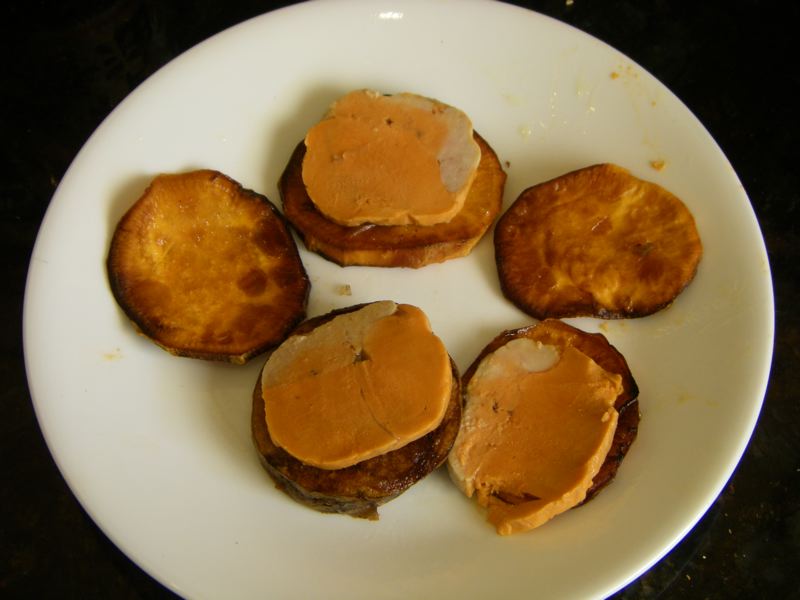
We'll get back to the haiga rice in a minute, but first a word about the ankimo. The monkfish liver we bought was steamed and frozen, but supposedly the product contained nothing besides the liver itself and some salt. It looked like a salami wrapped in plastic. We decided to serve it simply on home cooked potato chips which we had fried in goose fat. We tried a purple potato for a real starchy flavor and a sweet potato for a bit of sweetness.

Ankimo has a subtle flavor. There is a mild livery note, but it is a lot like foie gras and unctuous. We served thin slices of it on our potato chips, which were a perfect complement. The sweet potato chips were best, but the combination was rich and delicious, sort of a foie gras Napoleon. Maybe that is reaching a bit, it was a great combination and we ate most of the ankimo in one sitting.

We decided to eat the sea urchin roe raw, as sushi, rather than cooking it with butter, coriander, scallions, cayenne pepper and lemon. There are sea urchins right here off the coast of Port Angeles, and they are harvested commercially, but you'd be hard pressed to find them on sale locally.

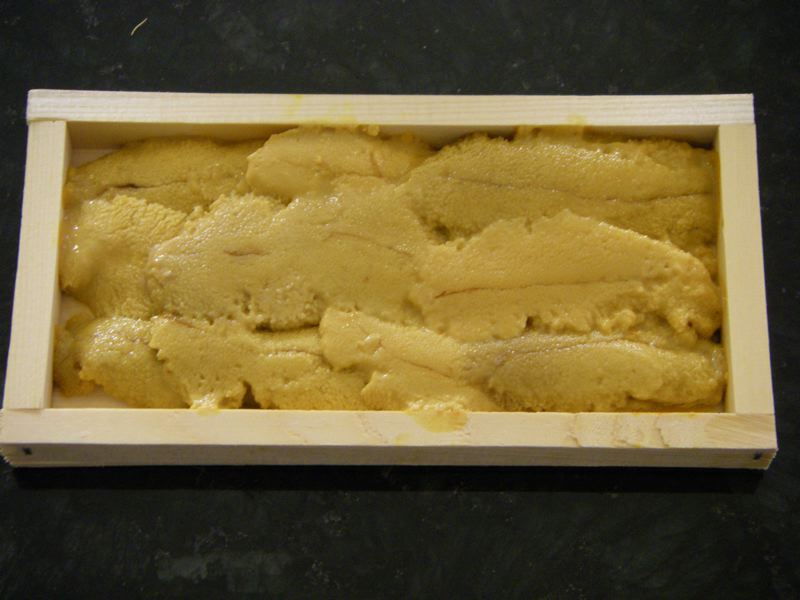
They are sold packed in little wooden boxes like the one shown on the right. Each box has its own little lid so that the boxes can be stacked without the delicate eggs getting crushed.


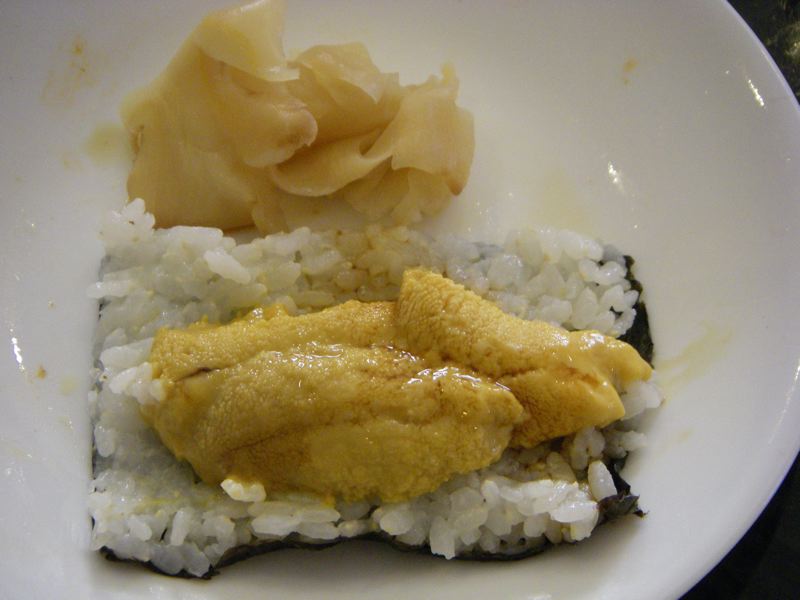
We spread the haiga rice on sheets of nori, dried seaweed. We cut the big sheet into rectangles, perhaps two inches by four inches and put a few pieces of uni on each. Then, we poured on tad of soy sauce and that was it. Most of the goodness of sushi is in the good ingredients. That's some pickled ginger on the plate with one of our unrolled uni rolls.

Our experiment was successful, and we actually got to use that bag of haiga rice. We'll be watching the member specials at Catalina Offshore Products to see if we can come up with any new ideas. If you are interested at all, you can sign up as a member pretty easily. You don't have to be running a restaurant. Hmm, the mackerel filets look kind of interesting, and we've never tasted geoduck clams. There's still plenty of room at the Kaleberg frontier.

Keywords: recipes, fish


12/28/08 - Turkey With Three Sauces

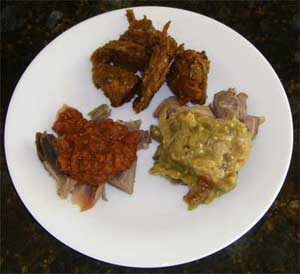
Like Ebenezer Scrooge, we had roast turkey for Christmas. Mind you, we've had a bit of a head start on celebrating the holiday, so we know that turkey is a traditional Christmas favorite. This year we made three different Mexican sauces, a red sauce, a green sauce and a brown sauce. That last one was a chocolate sauce. The red sauce was an old favorite, but the green sauce was a Kaleberg Labs project, and the clear winner in an excellent field. For recipes and more, check out Turkey With Three Sauces.

Keywords: food, recipes, christmas


12/15/08 - Smoked Steelhead

Did we mention that Tuna Dan has been selling steelhead, along with albacore tuna, at the Port Angeles Farmers' Market? We recently smoked up a fresh batch of steelhead in our kettle grill. Since we knew we were going to eat the whole thing with in a day or two, we didn't bother with the full dose of salt and smoke. We just rubbed three pounds of steelhead with a tablespoon of salt, a tablespoon of peppercorns (lightly crushed), two tablespoons of coriander seeds (lightly crushed) and four tablespoons of brown sugar and let them stand in the refrigerator overnight. In the morning, we smoked them for maybe 45 minutes in a closed kettle grill.

The results? Did we mention that we've already eaten all three pounds of fish? Yeah, they were that good.


Keywords: farmers' market, port angeles, recipes


12/03/08 - Cardamom Cookies

We love cardamom. It is an underused spice, possibly because it can be tricky to spell. Good luck trying to find cardomam on Google. Our favorite use for this spice is in cardamom cookies, and we seem to have lost our old recipe, so we are using a relatively new one from Gourmet. If you want, you can go to Epicurious and look the recipe up yourself, but the one here has been tested at Kaleberg Kitchens, so we know it works.

Bake a batch of these cookies, with or without cookie molds. You might even want to make them a bit thick. These are wonderful shortbread cookies. Shortbread cookies are what Lorna Doones are supposed to be but aren't. Your whole house will be scented with butter and cardamom, and if you like the baking scent of cinnamon, you will be ecstatic with the scent of cardamom. They are perfect for Christmas baking which is when all these old fashioned spices come out of the back of the cupboard and into the oven where they belong.


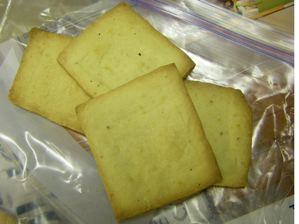
They don't look like much, but they are delicious.

An open cardamom pod
Orange Cardamom Cookies (basically the recipe from Gourmet 12/07)
  • 1 cup butter (2 sticks)
  • 3/4 cup sugar
  • 1 egg yolk
  • 2 tbsp heavy cream
  • 2 tbsp orange zest (or more)
  • 1 1/2 tsp ground cardamom
  • 1 tsp salt
  • 2 1/2 cups flour
Smoosh the butter until it is soft and workable. Add the sugar and smoosh it to the butter. Add the egg yolk and the heavy cream and work them into the butter which will get softer. Add the orange zest, cardamom and salt and continue smooshing. Finally, add the flour and work into a slightly crumbly dough.

Divide the dough into four parts and press them into flat rectangles. Let them rest in the refrigerator for 15 to 30 minutes or so. (We actually skip this step which is why our cookies aren't much to look at, but they taste just as good as better rested cookies.) Roll the cookie dough out to about 1/8 inch (or as much as 1/4 inch) on a floured work surface. If you have a speculatius cookie mold, you can use this, otherwise just cut the cookies into 2 inch by 3 inch squares and put them on a baking sheet. Bake for about 8-10 minutes at 350F. (We use a convection oven and special baking sheets, so we get quicker results.) Bake until the edges are brown.

Keywords: food, recipes


08/24/08 - Uni Toast

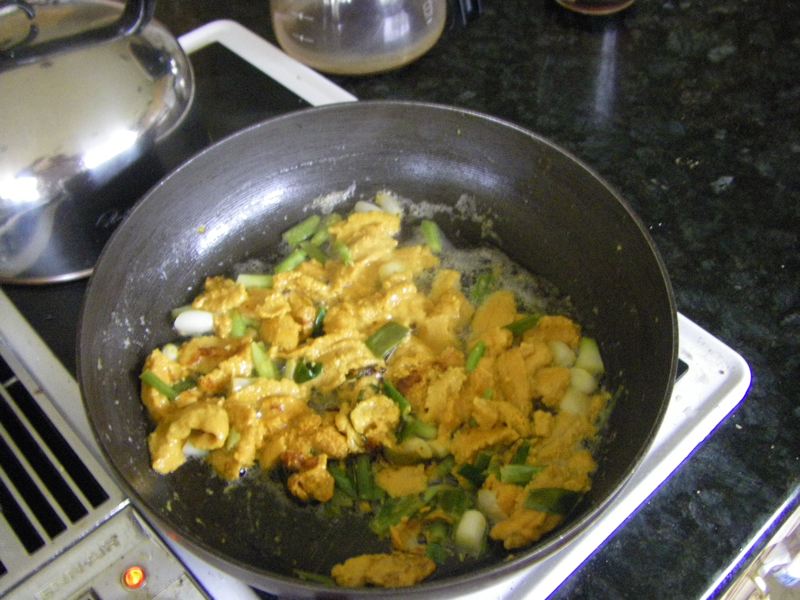
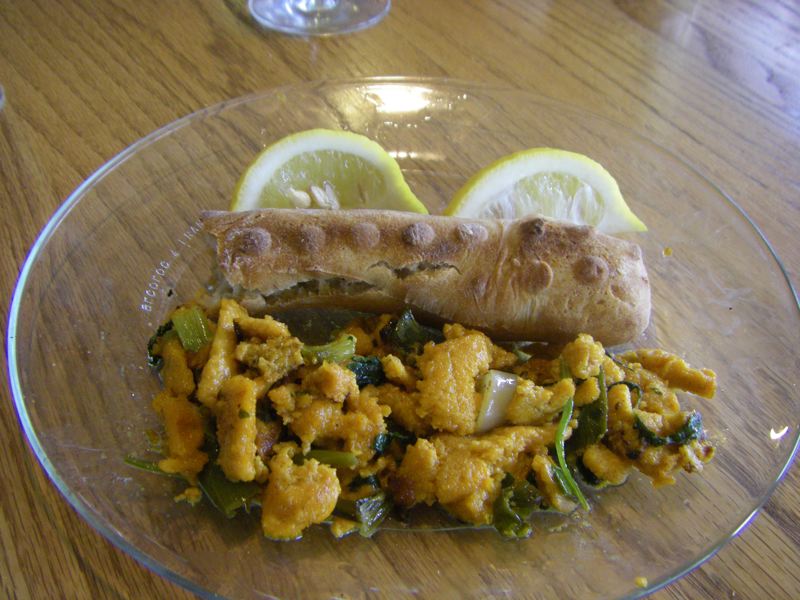
Every year, in late August, we have a seafood festival, and every year the star of our seafood festival is uni toast. Uni, sea urchin eggs, are usually eaten raw as sushi, but they are also delicious cooked. We get our uni from Catalina OP. It comes in little wooden pallettes each holding 80 grams of delicious orange yellow sea urchin eggs. They smell of the sea. Sauteed in butter, they have a deep, rich flavor. They might not look like much in these photographs, but we Kalebergs know that sea urchin roe is not just for sushi.

In the pan

On the plate with one of Jasper White's breadsticks
RECIPE
  • 320 grams (four flats) sea urchin roe
  • 2 tbsp butter
  • 6-8 scallions, cut into little slices
  • 1/2 cup fresh coriander, chopped
  • salt and pepper to taste
  • lemon juice to taste (perhaps half a lemon)
Melt the butter in the pan over medium high heat. Add the sea urchin roe and cook for a minute or two. Add the scallions. Cook for another minute or two until they start to soften. Add the coriander. Turn off the heat. Adjust the seasoning with salt, pepper and lemon juice.

We recommend serving this dish with either good sourdough toast or Jasper White's breadsticks.

Keywords: food, recipes


07/28/08 - Luau 2008

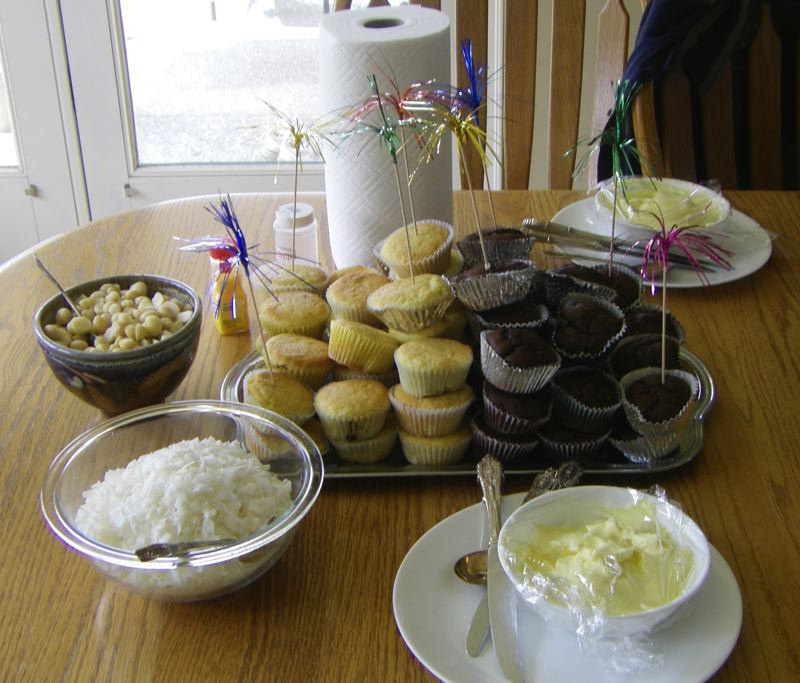
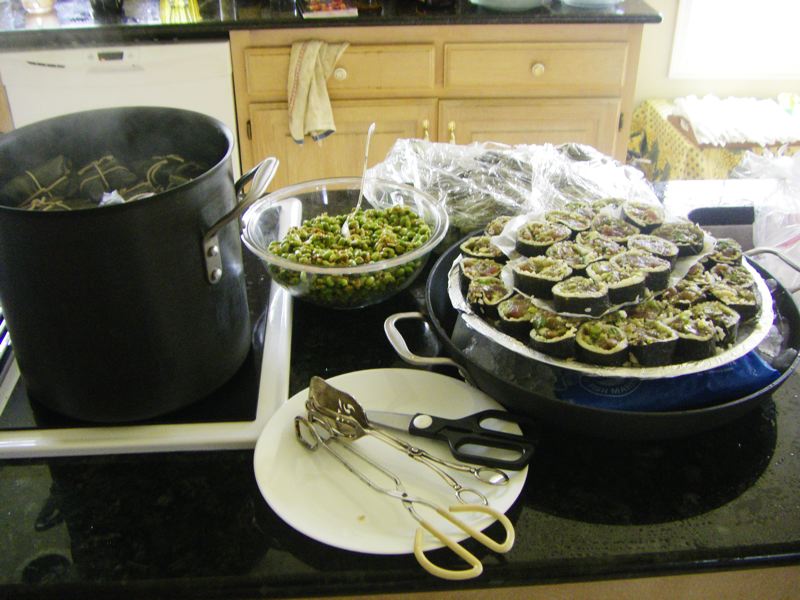
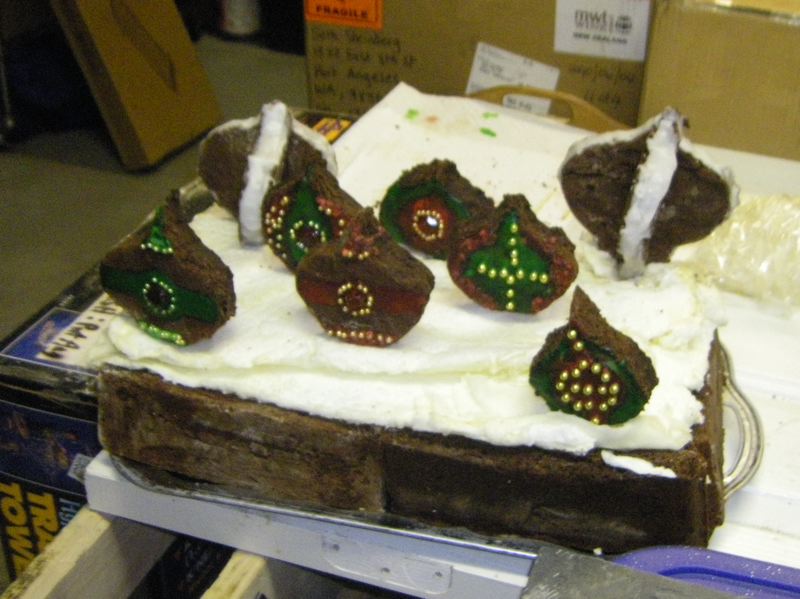
We should have posted sooner, but we were busy with our nearly annual Hawaiian luau. This year we built a cupcake heiau, incredibly loosely modeled after an old Hawaiian temple. As usual, we had lau lau, which is actually Hawaiian, and ahi tuna sushi, which is more Japanese. We also explored a new part of the Pacific Rim with a Balinese dish, chicken cooked in banana leaves. It was a surprise hit and a great way to use up all that turmeric root and galangal we had lying around.

You can find out more about the mechanics of the feast on our luau page.


The Cupcake Heiau with icings and toppings

Luau fixings: ahi tuna sushi, edamame, lau lau and Balinese chicken in banana leaves

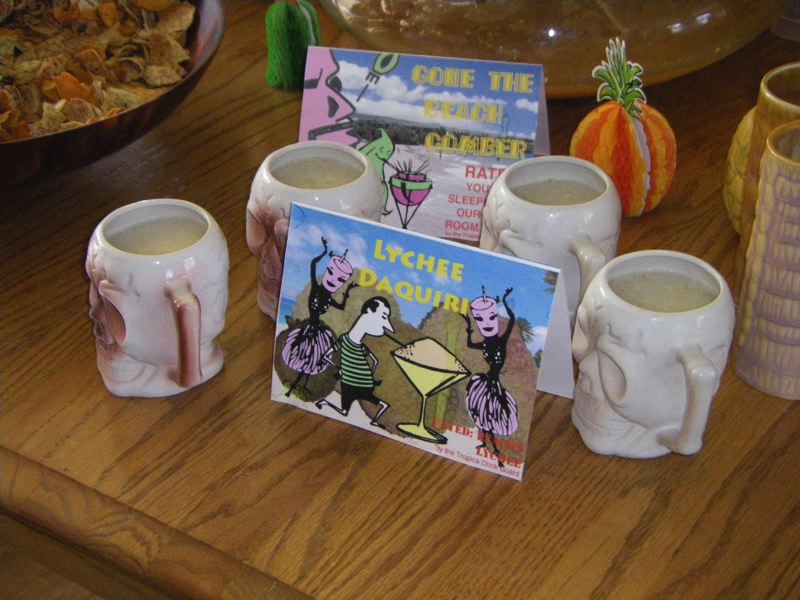
Served in a skull

Keywords: hawaii, luau, recipes


07/06/08 - Bones Diablo

Sunny Farms has some excellent beef sold under the name of Roger's. You never know what you'll find in their chiller, but it always pays to look. This time it was beef back ribs, which are basically the bones of a prime rib without the boring middle section. Unable to resist, we time warped back to the 1950s, or maybe even earlier, and cooked up some Bones Diablo, sometimes known as Deviled Bones.

This is a distinctly unfashionable dish. It is based on prime rib bones. It contains butter and more butter. It makes a Carnegie Deli pastrami sandwich look like a dietary treat. A small portion has enough fat to clog nearly 623,451 aortas. We love it. For safety reasons, you probably can't find a recipe for it in any modern cookbook. In fact, searching Google for "bones diablo" recipe gets you nothing.

We have an old James Beard party cookbook, so we're all good to go. We toasted up the bread crumbs, melted the butter, boiled the tarragon vinegar, roasted the bones and cooked down the veal stock. (Yeah, we have veal stock just sitting around). It didn't take all that long to make. We spiced up the sauce with mustard, worcester sauce, tabasco and lemon juice, and we were soon dining on breaded beef bones.

We are now in a fat induced stupor which will probably last for several weeks, or at least until we get hungry again which may be sooner. Bones Diablo is what beef is meant to be: rich, fatty, and flavorsome. The only known antidote is red wine. For reasons of public safety, we won't include the recipe here, but we may be persuaded to answer discreet inquiries.


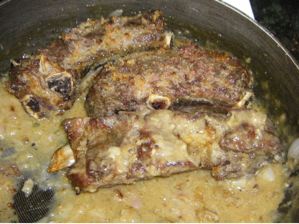
An arterial nightmare

Keywords: food, recipes


04/20/08 - Russian Easter 2008

We held our Russian Easter this last weekend. Yes, we know that Russian Easter was back in March this year, but we figure that if they can have Russian Easter for Old Calendrists and Russian Easter for New Calendrists, why can't we have Russian Easter for Kaleberg Kalendrists?

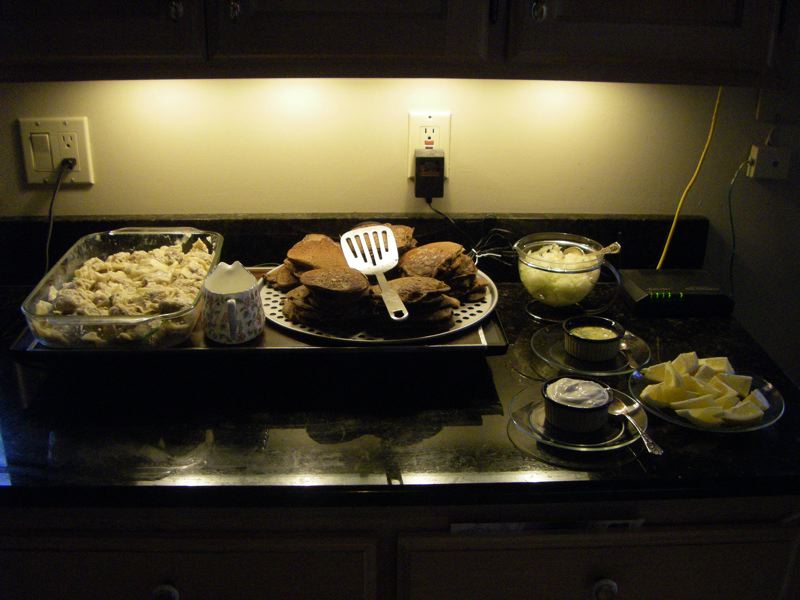
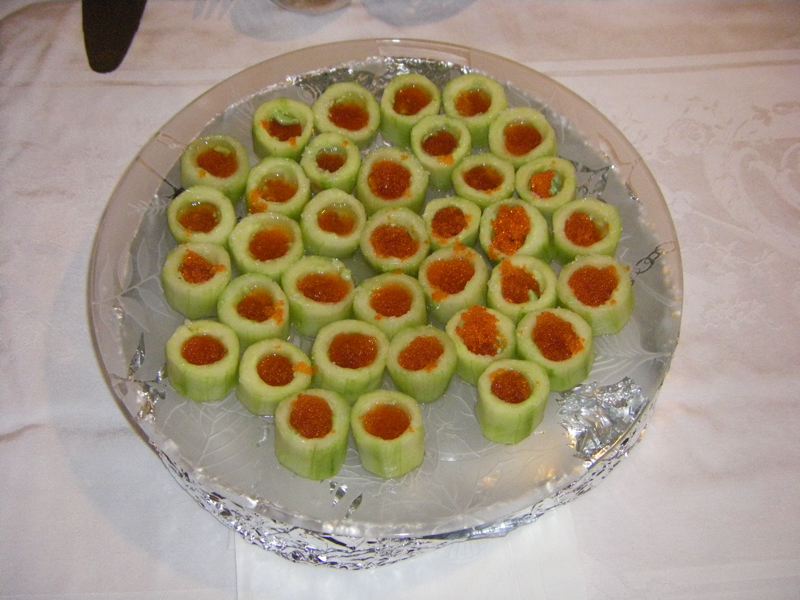
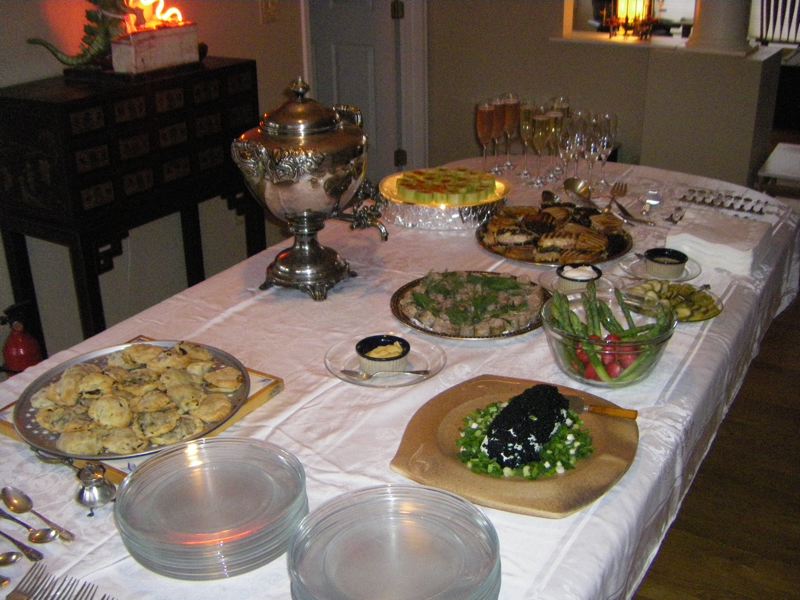
In any event, we rounded up the usual suspects, including a particularly deadly version of Trotsky's Bane with a ton of wasabi and serious tequila. If Trotsky had been drinking this, they wouldn't have needed to waste the people's time and money on assassins. We also made some perushki with our own home made sauerkraut and some shitake mushrooms and nettles. For more recipes, check out our Russian Easter page.

The domes of Moscow were particularly lurid this year, with lots of dragee and extra dark red and green food dyes. Those supermarket food dyes are really too pastel for a serious holiday like Russian Easter. In any event, Moscow was once again saved from the monster Napoleon thanks to a liberal dousing of French brandy. As the flames rose, and the Frenchies retreated, we celebrated the irony with, of all things, champagne.

This year, we had even more realism. We had real snow in mid-April, just like they did in Moscow before global warming. It didn't stick, but the white flakes added to the festive mood.


Moscow for the defense

Blini and pelmeni

Trotsky's Bane - death by tequila

The usual suspects, and then some

Yes, it was snowing

Keywords: recipes, russian easter


Glowing eerily

04/18/08 - Sauerkraut

This spring has been late in coming, so there has been a dearth of the usual spring vegetables. On the plus side, the local farmers still have a fair bit of cabbage. Cabbage is an old winter staple, so we at Kaleberg Laboratories decided that when life gives one cabbages, it is time to make sauerkraut.

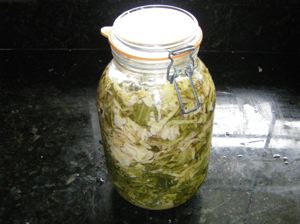
A bit over two weeks ago we took two heads of cabbage and ran them through the slicing blade of our trusty Cuisinart. Then, we tossed in about six garlic cloves for extra flavor. We packed the cabbage into a 3 liter storage jar and made up a pickling mixture of about a quart of water, two tablespoons of kosher salt, a teaspoon of peppercorns, a tablespoon of coriander seeds, and a half cup of apple cider vinegar. We brought this to a boil, let it cool and poured it into the jar with the cabbage. We had to add a bit of tap water to cover all the cabbage, but then, all we did was let it brew out in the garage. It has been mighty cool out in the garage lately.

Now, we have a delicious glowing green mass of preserved cabbage, and it is delicious. The cabbage has gotten that sauerkraut crunch, and the coriander seeds are wonderful in it.


OK, maybe it isn't actually glowing.

Keywords: spring, winter, recipes


04/06/08 - Smoked Steelhead

Tuna Dan has been coming to the Port Angeles Farmers' Market every Saturday for a while now. We even noticed that another fish guy has joined him selling halibut. Tuna Dan sells halibut, and he sells steelhead. We love smoked steelhead, so we at Kaleberg Labs have been experimenting with some of Tuna Dan's best.

We started with a half a fish, filleted. That weighed about five or six pounds before we removed the skin. We marinated it overnight in a pyrex dish with one cup of light brown sugar, a tablespoon of peppercorns, two tablespoons of kosher salt and three tablespoons of whole coriander seeds. We rubbed the fish with the mixture and let it sit in the refrigerator overnight.

In the morning, the pyrex dish was full of a thick brown liquid, a mixture of the rub and the water drawn from the fish by the salt. We set up a fire in our trusty Weber grill. We use hardwood charcoal from Hasty Bake. It has a cleaner flavor than briquets. We also throw in a chunk of apple wood from an old stump to give it a little fruit wood flavor.

When the fire is hot with perhaps half the coals turning white, we toss in the apple wood and set up for smoking. That means putting the fish on the grill, but not over the hot coals, and closing the bucket with the vents wide open. In a few minutes, the steelhead is smoking with a white cloud pouring out of the little vent on the grill lid.

We have learned, from a sadly overcooked batch of fish, that we need to keep an eye on the grill. If the fire is too hot, we close the vent a bit more. If the fire has gotten too cool, we have to open the grill for a bit, and sometimes add a bit more charcoal. It isn't like cooking on a stove or in an oven.

Sometimes, the fish is ready in as little as half an hour. That is, if it is thinly cut. Usually, it takes about 45 minutes, or even an hour. Done, of course, is a matter of taste. Once the fish is cooked through, you can smoke it down to leather. We like it a bit more tender, and we find that the flavor ripens after the fish is removed from the grill and let sit.

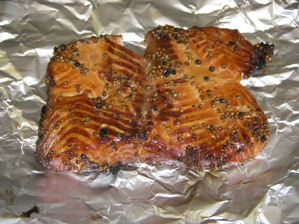
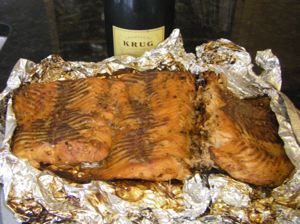
That's the Kaleberg Labs recipe, and that's some of the fish on the right. We used a real fast shutter to take that snap. You know how long food lasts here Chez Kaleberg.


Good enough to eat

Keywords: food, recipes


02/18/08 - Home Made Penne For Macaroni and Cheese

Macaroni and cheese is almost the canonical comfort food. Unfortunately, too many people swear by some packaged version with that wretched cheese style food product and synthetic PVC macaroni. We like macaroni and cheese as much as anyone, but our Domaine Cliche version is something else again.

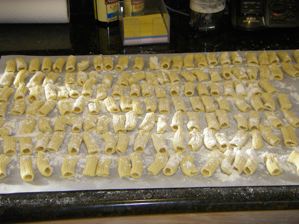
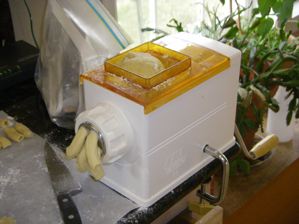
For starters, we make our own macaroni, or rather, penne, using our hand cranked tube pasta extrusion machine. We stuff the pasta dough in the top, turn the crank and every inch or two cut off four nicely formed penne. The pasta dough is basically flour, eggs, salt and water, and we tend to make the dough a touch damp so it is a bit softer.


Penne in waiting

Old reliable, our tube pasta extruder
The next step is making a bechamel sauce. That's just a half a stick of butter, a few tablespoons of flour and a cup of milk or cream depending on how rich you want it. We like it rich, so we use Dungeness Valley Creamery cream to thicken our milk. Melt the butter, stir in the flour, whisk in the milk. We boil the penne, drain them, then dump them in the bechamel.

So, where is the cheese? We put the cheese on the top. Our favorite is a good aged gruyere, but some folks use Swiss cheese instead. We spread a cup or so of grated gruyere on top and pop the whole dish into the broiler. (It helps if you make the bechamel in a sauce pan that can go in the oven). When the cheese is molten, the dish is ready. Comfort is at hand.

Keywords: food, recipes


Like an alien sculpture they lurk and bubble

02/07/08 - Marrow Bones

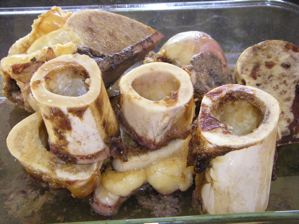
We recently gave in to temptation and enjoyed a round of marrow bones. They were marked "dog bones" at Sunny Farms. Not being big fans of dog meat, we checked with the butcher. Indeed they were cow meat bones being sold to dog owners to feed to their dogs, but there was no reason to let the dogs have all the fun.

Marrow bones are more or less inedible, unless perhaps you are a dog with very strong jaws. The marrow inside, however, is delicious. The taste is somewhere between beef and butter, or perhaps between butter and beef, or perhaps beefy butter. In any event, it is very rich. This is not diet food.

Marrow bones are easy to make. Just put them in a pyrex pan with some white wine, enough to fill the pan to a quarter inch or so. Bake them at 450F for about 45 minutes. The marrow will be oozing and bubbling. You can check it with a meat thermometer if you like, but we'll go with oozing and bubbling. When in doubt, let it cook a bit longer. You don't want to eat raw marrow.

While the marrow roasts, toast up some good bread in the oven. We had some pain levain which was great. Chop up some garlic and rub it on the toast. Sprinkle lightly with a little fleur de sel, or other good coarse salt. (Yes, this garlic toast is pretty good on its own, but it's even better with marrow). When the marrow is ready, poke it out with a fork, a spoon, a chopstick, a crochet hook, or whatever you have handy. Professionals may use a marrow spoon, but we Kalebergs are strictly amateurs. Cover the toast with a nice layer of molten marrow and take a bite. Smile.

Keywords: food, recipes


01/01/08 - Updated Cassoulet Recipe

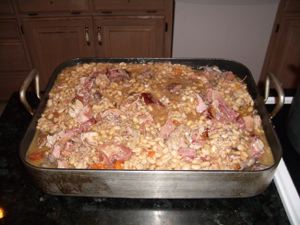
We've updated our cassoulet recipe, including pictures from the 2005 build. Every two years we make a magnificent cassoulet, and each time we learn a few new tricks. It turns out that our recipe, first posted in the late 1990s has gotten a bit out of date. For the latest results click here.

Keywords: food, recipes


11/29/07 - Lacinato Kale Salad

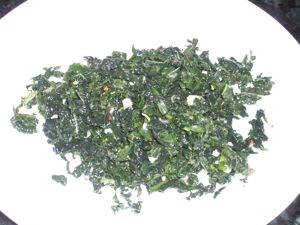
It may not look like much, but this is a wonderful salad made with our own local lacinato kale, which is sometimes called dinosaur kale because of its wrinkled leaves.

The recipe is simple. Take a bunch of lacinato kale, clean it, remove the stalks, roll it up and cut it into thin strips, perhaps a 1/4 or 1/3 of an inch across. Toss it with a couple of cloves worth of minced garlic, a teaspoon of dried red pepper flakes, a tablespoon of olive oil and lots of lemon. Some lemons are juicier than others, so sometimes a half a lemon will do it, but sometimes we'll need as whole lemon's worth.

It's a light, refreshing salad, and real taste of the North Olympic Peninsula.

Keywords: food, recipes


10/03/07 - Moroccan Steamed Lamb Shank

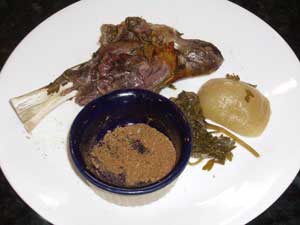
This is one of our favorite dishes from Paula Wolfert's book on Moroccan cooking, Couscous and Other Good Food from Morocco. It's easy to make if you have a good steamer or a couscousiere. Get yourself from four to six lamb shanks, a fistful or two of parsley, a couple of onions (peeled), some good saffron, black pepper and perhaps half a stick of butter, maybe a bit less. Squeeze the butter until it softens, sprinkle on the saffron and pepper, then smush and fold a few times to make saffron-pepper butter.

Now, set up the steamer with lots of water. The cooking time is an hour and a half to two hours. You want the shanks tender. Rub the shanks with the saffron-pepper butter. Put the parsley in the steaming basket as a base layer. Then put in the shanks and the peeled onions. Seal the thing up. Check now and then to see if the steamer needs more water, and after 90 minutes start checking to see if the meat is falling off the bone.

When the shanks are ready, mix a few teaspoons of ground cumin with some salt to make the dip. Use gray salt, fleur de sel or kosher salt for better balance and a nice crunch. This is an amazingly good dish. The lamb will be silken and redolent of saffron.


Lamb Shank, Onion, Parsley and the Cumin-Salt Dip

Keywords: food, recipes


08/05/07 - Black Douglas Cod - A Northwestern Treat

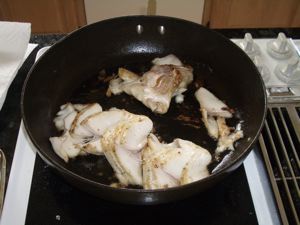
We'll admit that isn't the best picture there, but we have discovered a great way to prepare black cod. Black cod is an oily fish, and there is a temptation to blast it with flavor. We often marinate it in mirin and soy sauce, but this time we took a more subtle approach. We marinated a two pound filet overnight in two or three tablespoons of Clear Creek Douglas Fir Eau de Vie, a quarter teaspoon of wasabi powder, a quarter teaspoon of freshly cracked black pepper and two pinches of sea salt. We stared roasting the fish in the oven, but we wanted to render the fat so we popped it in a frying pan until it was nicely flakey and just starting to brown.

This dish was suggested by a dish we had at Coupage, a Korean fusion restaurant in Seattle. They served arctic char marinated in fir eau de vie, and it was quite good. This dish has a slightly stronger flavor, and the light green notes of the fir buds come across as rather bright and fruity. No, it doesn't taste like wood pulp.

You might want to check out Clear Creek Distillery, the folks who make the eau de vie, or check out the Washington State Liquor Board for availability.


Not the best picture, but it sure tastes good.

Keywords: fish, seattle, recipes


05/05/07 - Peashoots and Asparagus at the Port Angeles Farmers' Market

We are just back from the Farmers' Market, and we have to report that spring is moving along.

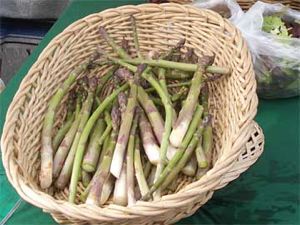
Westwind Farm has the most amazing asparagus. We've never tasted any this good before. Go for the big fat ones, if there are any left when you get their. When you get them home, peel them and steam them, or boil them. Also, this may be the last week they have their nettles, so hurry up if you want to dry making nettle soup or ravioli.

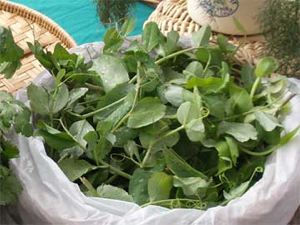
The Johnston Farm is selling pea shoots, a sure sign of the season. They also have their baby potatoes, lots of herbs, carrots and coriander.

Harley at Dry Creek Farm says that his salad greens are doing nothing, but he does have his eggs. His organic oats are also doing well, but the cold weather has slowed things.

Nash Huber has great looking Swiss chard and lots of little cauliflowers. We bought three bunches of the stuff, so we'll be making our Swiss chard and tuna spaghetti again real soon.

Keywords: farms, recipes, nash huber, dry creek farm, johnston farm, food, spring, farmers' market, westwind farm


Newer Entries  Older Entries